The short answer — five rules: Wash by hand in cold water with a mild detergent. Never scrub, soak for long, or wring the embroidery. Rinse clean, press the water out gently, and dry flat or on a hanger in shade. Iron on the reverse side at low-to-medium heat. Store folded in a breathable cotton or muslin bag, not hanging and not in plastic. Everything below is those five rules, done properly.
Wear is not what damages Chikankari. Cotton pieces are made to be worn often. The damage comes from hot water, harsh detergent, twisting, direct sun and damp plastic storage. Avoid those five and the embroidery stays crisp.
Quick reference: Chikankari care at a glance
| Step | Do this |
|---|---|
| Wash | Hand wash, cold water, mild detergent, inside out |
| Dry | Shade only, flat or on a padded hanger, never tumble dry |
| Iron | Reverse side, low-to-medium heat, cloth over embroidery |
| Store | Folded in a cotton or muslin bag, never plastic |
Why Chikankari care is different from regular clothes
A printed kurti can survive almost anything because the design sits in the fabric. Chikankari embroidery sits on it: thread worked over the cotton surface. That creates three risks. Raised stitches snag, because zips, rough surfaces, jewellery and even a scrubbing hand can catch a loop and pull a motif out of shape. Thread and base cotton react differently to chemicals, so a harsh detergent or bleach that the cotton tolerates may fade or weaken the embroidery. Stitches also trap soap and water, so a rushed rinse leaves residue that dries stiff and dull. None of this makes Chikankari fragile. All three risks are easy to avoid once you know they exist.
Before the first wash
- Turn the garment inside out. This one habit protects the embroidery through every later step.
- Check for loose threads and open seams. Snip nothing that is part of the embroidery; if a seam is open, mend it first, because washing widens damage.
- Test colour fastness on a hidden area (inside hem) with a damp white cloth. Deeper tones like our Rosewood Kurti and Blush Vine Kurta deserve this 30-second check before their first full wash.
- Separate by colour. Ivory and white Chikankari should never share first-wash water with deeper shades.
Hand washing, step by step
- Fill a basin with cold water and dissolve a small amount of mild, bleach-free detergent before the garment goes in.
- Submerge the inside-out garment and swish it gently. Let it soak 10–15 minutes at most.
- Work only with soft hand pressure. No scrubbing, no brushing, no wringing. Twisting is what distorts stitches and pulls motifs out of shape.
- Rinse in clean cold water until no soap remains. Soap left in embroidery dries stiff and dulls the thread.
- Lift the garment supported from underneath, press water out against the basin, then roll it in a clean dry towel and press again. Do not hang it dripping, because water weight stretches wet cotton.
White and ivory Chikankari: extra rules
Pale pieces — our Ivory Buti Everyday Kurti and the Pearl Garden Suit Set — need three extra habits:
- Always wash separately. One wash shared with a deeper shade can leave ivory cotton permanently greyed.
- Never use bleach. It attacks embroidery thread and can yellow cotton rather than whiten it. A dull pale piece usually means soap residue or sun, not a need for bleach. See the yellowing question in the FAQ.
- Add a vinegar rinse. A tablespoon of white vinegar in the final rinse basin helps clear the last soap from the stitches; rinse once more in plain cold water.
Dry pale pieces in shade without exception. Sun yellows ivory cotton.
Can you machine wash Chikankari? The honest answer
Hand washing is the safe default, and the only method we recommend for suit sets and denser embroidery. If you must machine wash a light everyday cotton kurti: inside out, in a mesh laundry bag, delicate/hand-wash cycle, cold water, lowest spin, mild detergent, and remove it immediately. Never machine wash a piece with loose embroidery, and never tumble dry. If the garment matters to you, the basin takes ten minutes. Spend them.
Drying and ironing
- Dry in shade, flat or on a padded hanger. Direct sun fades dyed thread and yellows ivory cotton over time.
- Iron on the reverse side, low-to-medium heat, while very slightly damp or with a thin cotton cloth between iron and embroidery. Ironing directly on raised stitches flattens the texture that makes Chikankari read as handcraft.
If a thread comes loose: rescue steps
A loose thread is not a ruined garment. Pulling it is what ruins the garment. Instead:
- Never pull, and never cut a loop from the front. Pulling distorts the neighbouring stitches.
- Turn the garment inside out and find the loose end on the reverse, where most threads finish.
- Ease the loop back. With a blunt needle or fingertip, push the slack through to the reverse a little at a time.
- Secure it on the reverse with two or three tiny stitches in matching thread, or a small flat knot.
- Know the limit. A single loose end is a home repair. A large unravelled patch, torn fabric or damage across a dense motif belongs to a professional. Never wash the piece first, as washing widens damage.
Check for loose ends after every wash. Thirty seconds of checking prevents the one difficult repair.
When to choose dry cleaning instead
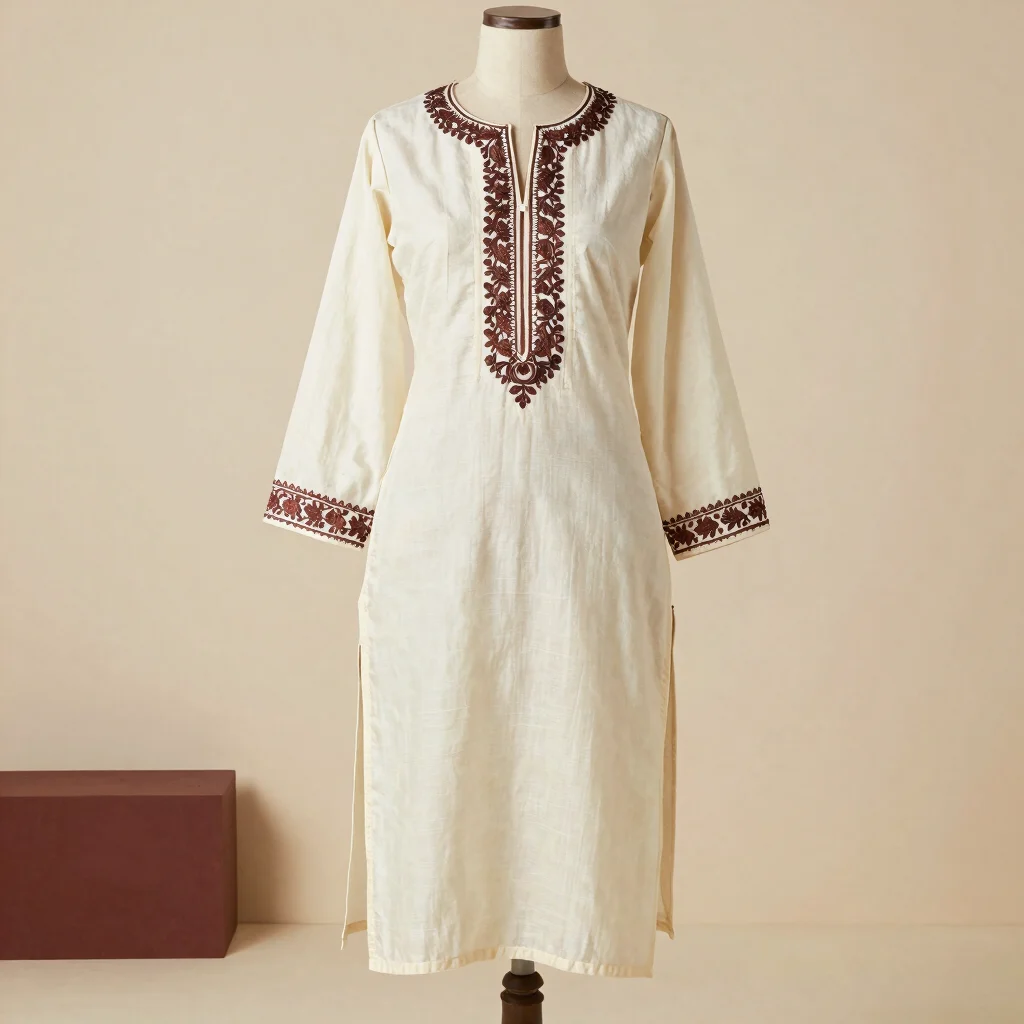
Hand washing covers most everyday cotton Chikankari. Choose professional dry cleaning when:
- The piece is a suit set or heavily embroidered garment. Our Pearl Garden Suit Set is the example in our range.
- The stain is oil, makeup, turmeric or ink, or has already dried in.
- The embroidery is loose, lifting or damaged, and washing would spread it.
- White or ivory has yellowed and the home rinse in the FAQ has not shifted it.
- The care label says dry clean. The label always wins, including over this page.
Tell the cleaner it is embroidered cotton, and ask for it back folded, not hung.
Storage: where Chikankari actually gets ruined
Most damage happens in the cupboard, not the wash.
- Store folded along natural seams, in a cotton or muslin bag that lets the fabric breathe.
- Never store in plastic covers. Trapped moisture invites mildew and yellowing.
- Avoid long hanging for heavily embroidered pieces; gravity slowly pulls the work.
- Refold along different lines every few months so creases don’t set into the embroidery.
- Keep away from perfume sprays and damp walls. Moth protection belongs in a sachet beside the garment, not touching it.
Stain first-aid (and its limits)
Act fast and blot. Never rub. Cold water alone lifts most fresh marks. A paste of mild detergent on a small hidden-tested area can help with everyday marks. Turmeric, oil and makeup stains on embroidery are a dry-cleaner’s job, because home scrubbing spreads them into the stitches. Knowing when to stop is the care skill.
Common care mistakes
| Do | Don’t |
|---|---|
| Hand wash cold, inside out | Soak for hours in warm water |
| Mild, bleach-free detergent | Harsh detergent, bleach, fabric softener |
| Press water out, roll in a towel | Wring, twist or hang dripping |
| Dry flat or padded hanger, in shade | Direct sun or tumble dry |
| Iron reverse side, cloth barrier | Iron directly on raised stitches |
| Store folded in cotton or muslin | Plastic covers, or hanging for months |
Fabric softener feels like kindness and is not: it coats fibres, dulling thread and flattening stitch texture. Skip it. A clean rinse leaves cotton soft on its own.
A simple after-wear routine
Most care happens between washes. Four habits after each wear:
- Air it. Hang the kurti in shade or a ventilated room for a few hours before it returns to the cupboard. Aired cotton often needs no wash at all.
- Check it. Glance over the embroidery for loose ends, snags and marks. Fresh stains are the easy ones.
- Rotate it. Rest a worn piece at least a day before wearing it again, so stitches recover their shape.
- Refold it. Fold along a different line than last time, back into its muslin bag, so no crease sets permanently.
Air, check, rotate, refold. Two minutes, and no special product needed.
Frequently asked questions
How often should I wash a Chikankari kurti? When it needs it, not after every wear. Airing in shade between wears reduces washes, and every avoided wash is embroidery life saved.
Can I dry clean Chikankari instead? Yes. See “When to choose dry cleaning instead” above. For regular cotton kurtis, correct hand washing is gentler over time and costs nothing.
Why did my white Chikankari turn dull? Usually soap residue, sun drying, or plastic storage. A clean cold rinse, shade drying and muslin storage reverse most dullness that isn’t dye loss.
Should I starch Chikankari? Light starch is traditional for crisp kurtis, but skip it on soft everyday pieces. It stiffens embroidery and makes washing harder.
Can I use fabric softener on Chikankari? No. Softener coats the fibres, dulls embroidery thread and flattens stitch texture. If a piece feels stiff, the cause is usually soap residue. Re-rinse in clean cold water instead.
How do I remove yellowing from white Chikankari? Start gently: cold-water soak with mild detergent, the vinegar rinse, shade drying. Never use bleach. It weakens thread and can set yellowing rather than lift it. If yellowing survives that, take the piece to a dry cleaner.
Can Chikankari shrink in the first wash? Cotton can shrink slightly in a first wash; hot water and tumble drying make it worse. Washing cold, by hand, and drying in shade is also the anti-shrink routine. If you are between sizes when buying, keep that small first-wash settling in mind.
The bottom line
Cold water, mild detergent, no wringing, shade, reverse iron, muslin storage. Six habits, and pieces like our Ivory Buti Everyday Kurti stay everyday-worthy instead of becoming “too delicate to wear.” Care is also a buying decision. If this routine sounds like too much, choose lighter embroidery you will actually maintain, and read our buying guide before you decide. For cotton care, see the the cotton guide; for a finished outfit, see the the complete-look guide; and for choosing a piece, see the the buying guide.
To check your routine against the common pitfalls, see the care-mistakes guide, which lists eight habits that ruin embroidery and what to do instead.