Emerald Green Chikankari Kurti — a simple, beautiful kurti with a 400-year-old story
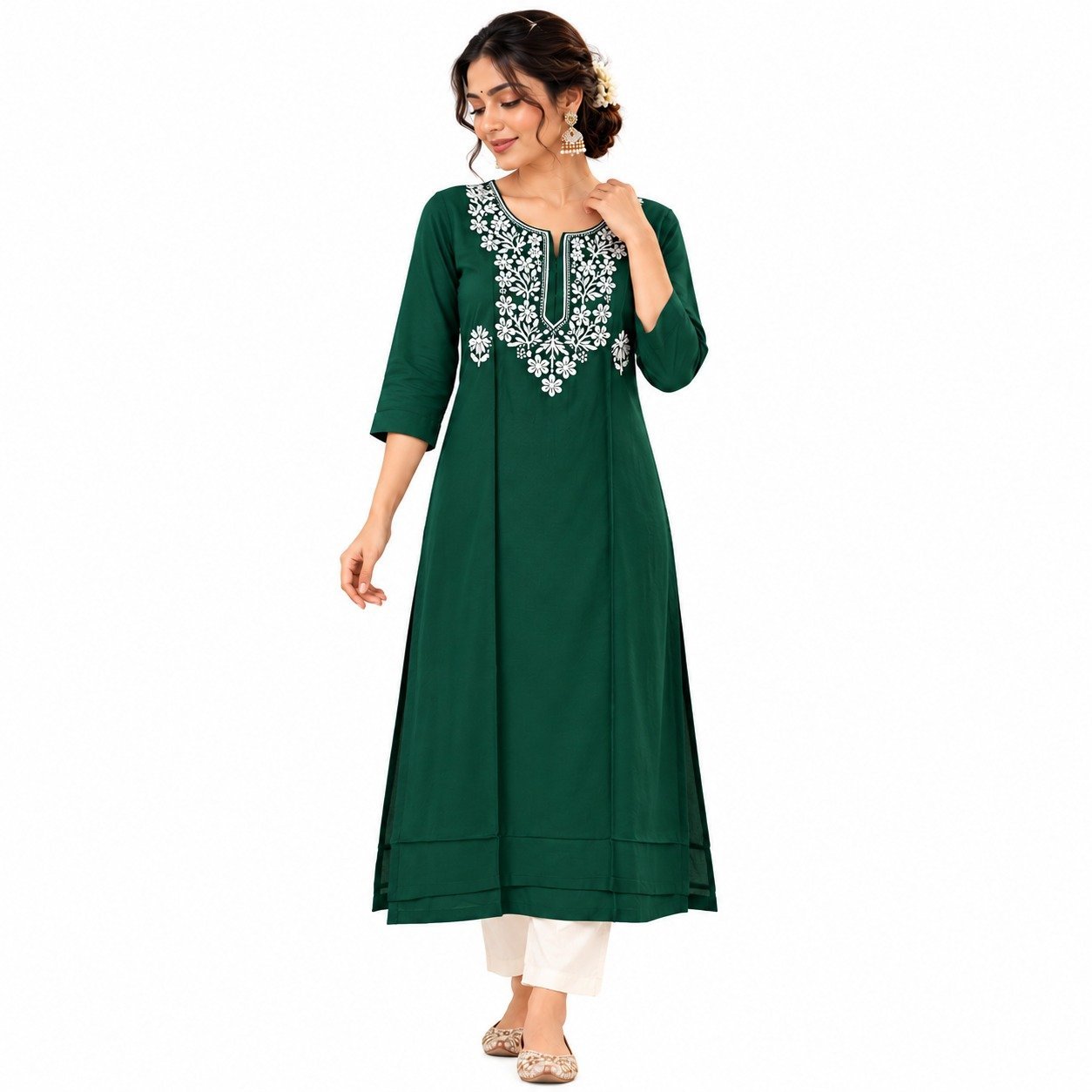
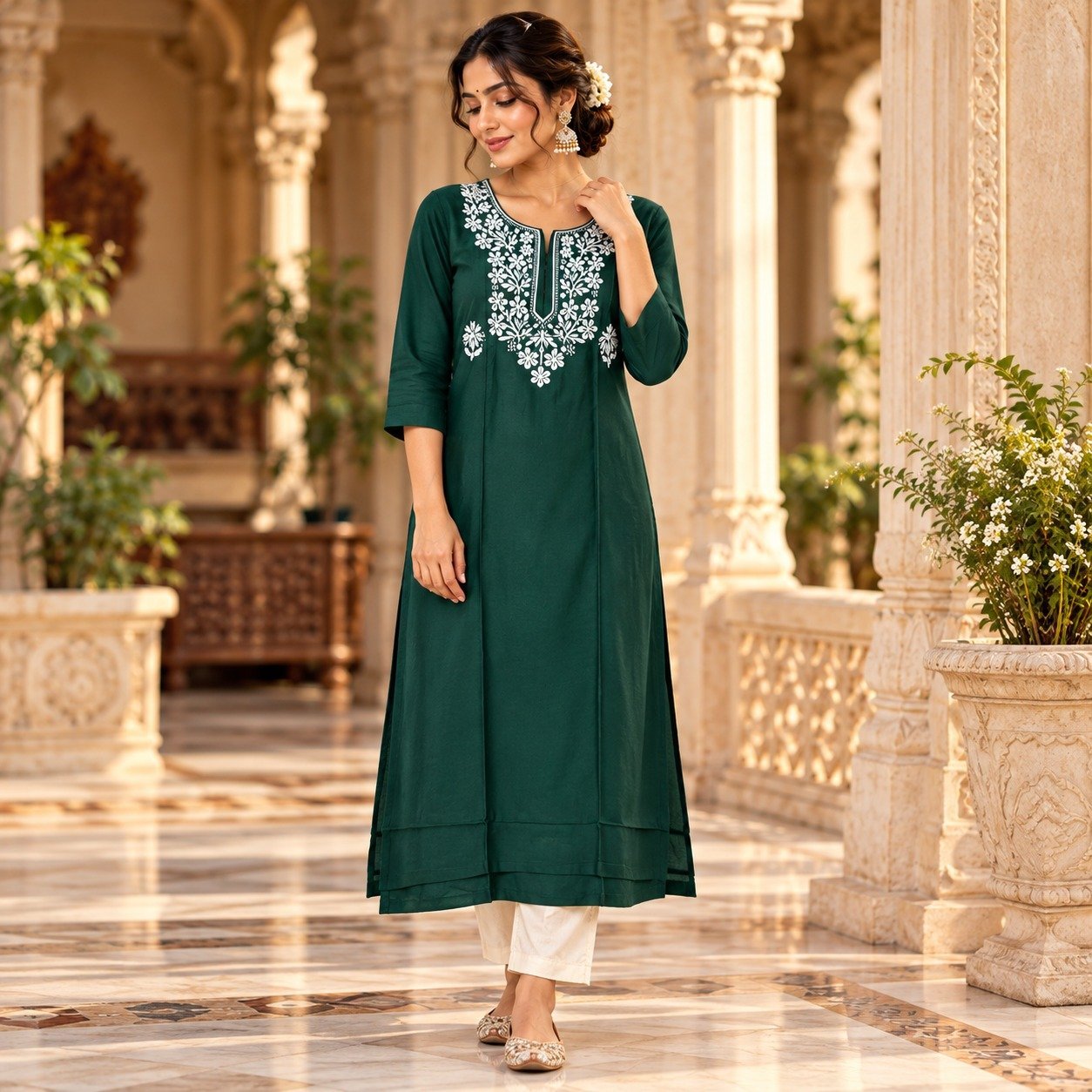
This is a long, deep-green kurti with white flower embroidery on the neck and chest area. The embroidery is called Chikankari. It is soft on the eyes, light to wear, and easy to style. You can wear it for daily use, office, family functions, and festivals.
Product details — in simple words
- Colour: Deep emerald green, with white embroidery
- Embroidery: White Chikankari flowers on the neckline and yoke (the chest area)
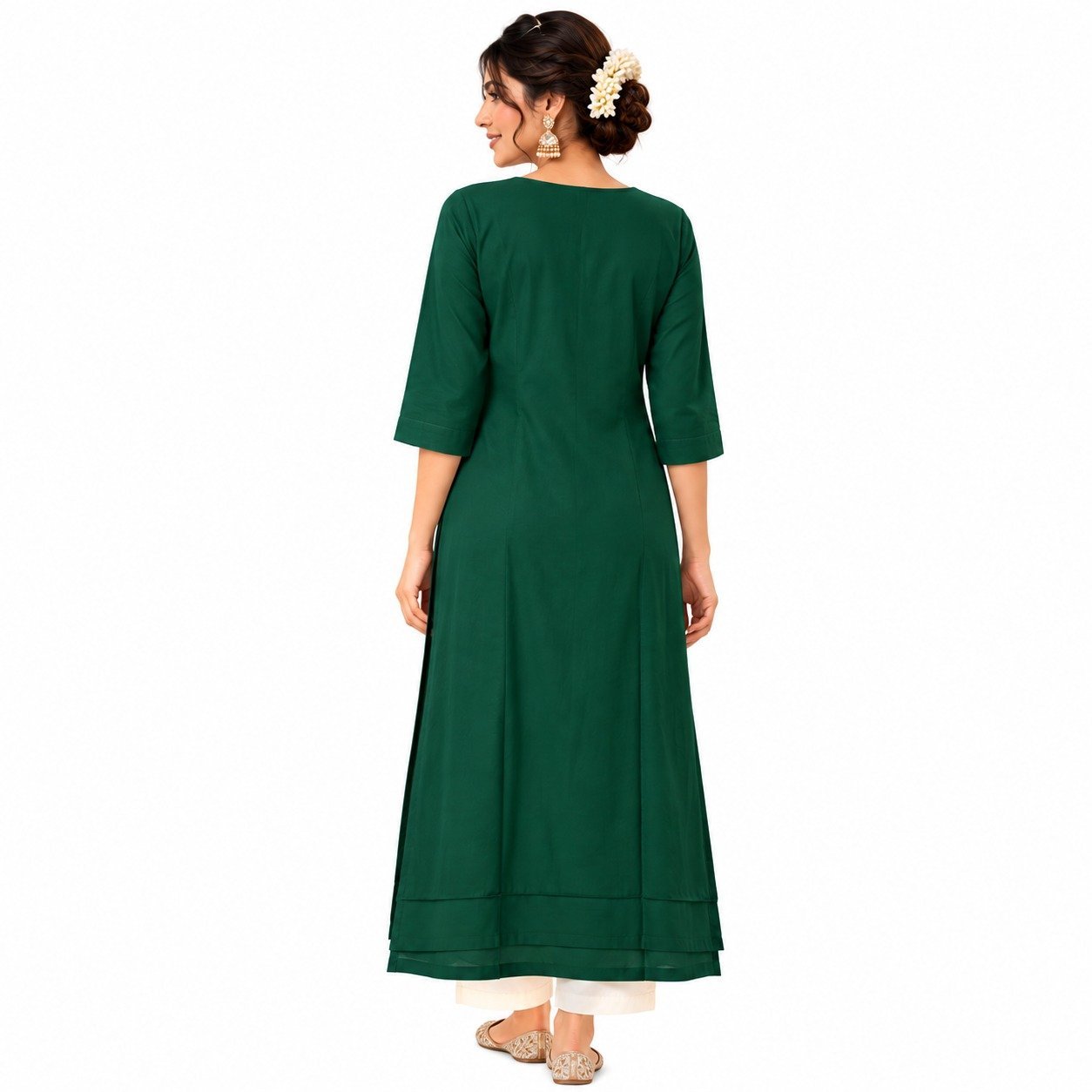
- Neckline: Round neck with a small slit in the front
- Sleeves: 3/4th sleeves (they end below the elbow)
- Length and shape: Long kurti with a straight, flowing shape and a layered hem at the bottom
- Price: ₹499
- What you get: Only the kurti. The white pants, earrings, and shoes in the photos are only for styling ideas — they are not included.
Where does Chikankari come from?
Chikankari comes from Lucknow, a city in Uttar Pradesh, India. It is one of India’s oldest and most loved embroidery styles.
Stories say it became famous in the time of the Mughal kings, about 400 years ago, when Empress Nur Jahan loved this embroidery and helped it grow. Later, the Nawabs (kings) of Awadh also supported it. Even today, Lucknow is known as the home of Chikankari.
In December 2008, Lucknow Chikankari got a special Geographical Indication (GI) tag. This tag means: real, traditional Chikankari belongs to Lucknow. It protects the craft and the people who make it.
How is Chikankari made? — in 4 simple steps
This is how the traditional craft works, step by step:
- Design: First, the flower design is drawn on paper.
- Block printing: The design is carved on a wooden block. The block is dipped in washable colour and pressed on the cloth, so the design appears lightly on the fabric.
- Embroidery: A skilled worker (called a karigar) stitches over the printed design with a needle and thread. Different stitches make different effects — some stitches are flat, some are raised like tiny rice grains, and some make a soft shadow from the back of the cloth. This slow, careful work is what makes Chikankari look so fine.
- Washing and finishing: After stitching, the cloth is washed. The printed colour washes away, and only the beautiful embroidery remains. Loose threads are cut, and the piece is finished.
That is why Chikankari looks simple from far away, but very rich when you look closely.
Why people love Chikankari
- It looks royal, but it is simple and comfortable.
- The white thread on colour makes the flowers stand out softly.
- It never goes out of fashion — it has been loved for hundreds of years.
- One kurti can be worn in many ways, so it is good value for money.
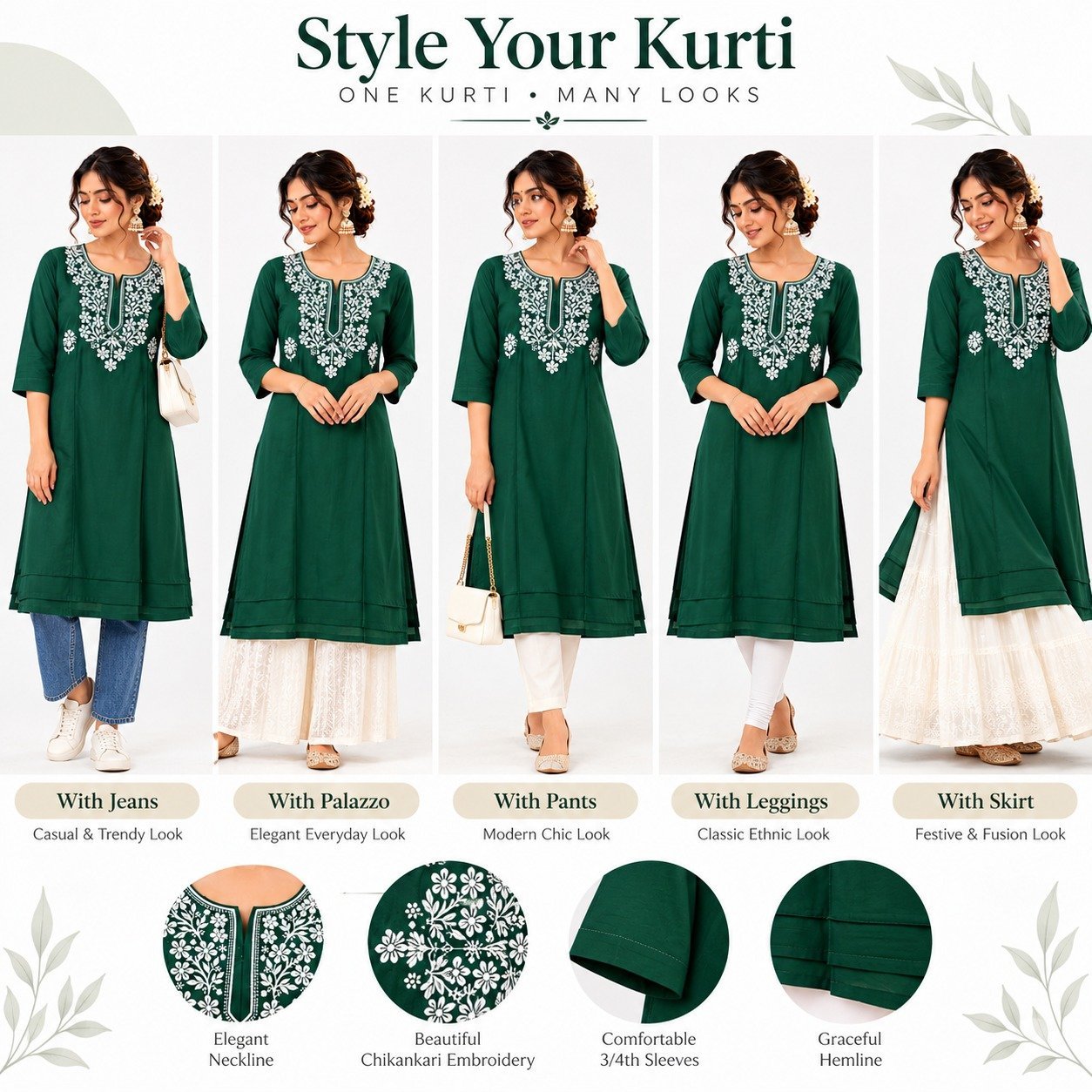
One kurti, many looks
- With jeans — a casual, trendy everyday look
- With a palazzo — an elegant everyday look
- With pants — a modern, chic look
- With leggings — the classic ethnic look
- With a skirt — a festive, fusion look
How to style it
Keep the neckline free so the embroidery shows. Wear jhumka earrings, carry a potli bag for festivals, and wear juttis or mojris on your feet. For more ideas, read our complete Chikankari look guide: https://adaaecouture.com/complete-chikankari-look-jewellery-potli/
How to take care of it
Wash by hand in cold water with a mild soap. Do not rub or twist the embroidery. Dry in shade, not in direct sun. Iron from the back side (reverse side). For the full, easy care routine, read our Chikankari care guide: https://adaaecouture.com/how-to-wash-and-store-chikankari/
Frequently asked questions
What is included in this price? Only the kurti. The white pants, earrings, and shoes in the photos are styling ideas only.
Is Chikankari from Lucknow? Yes. Chikankari is Lucknow’s traditional embroidery, and it carries a GI tag from December 2008.
How do I wash this kurti? Wash by hand in cold water with mild soap, dry in shade, and iron from the back. See the care guide linked above.
How many ways can I wear it? At least five — with jeans, palazzo, pants, leggings, or a skirt.
Reviews
There are no reviews yet.